X-Ray Diffraction analysis offers unrivalled insights to geological materials, but isn’t without challenge.
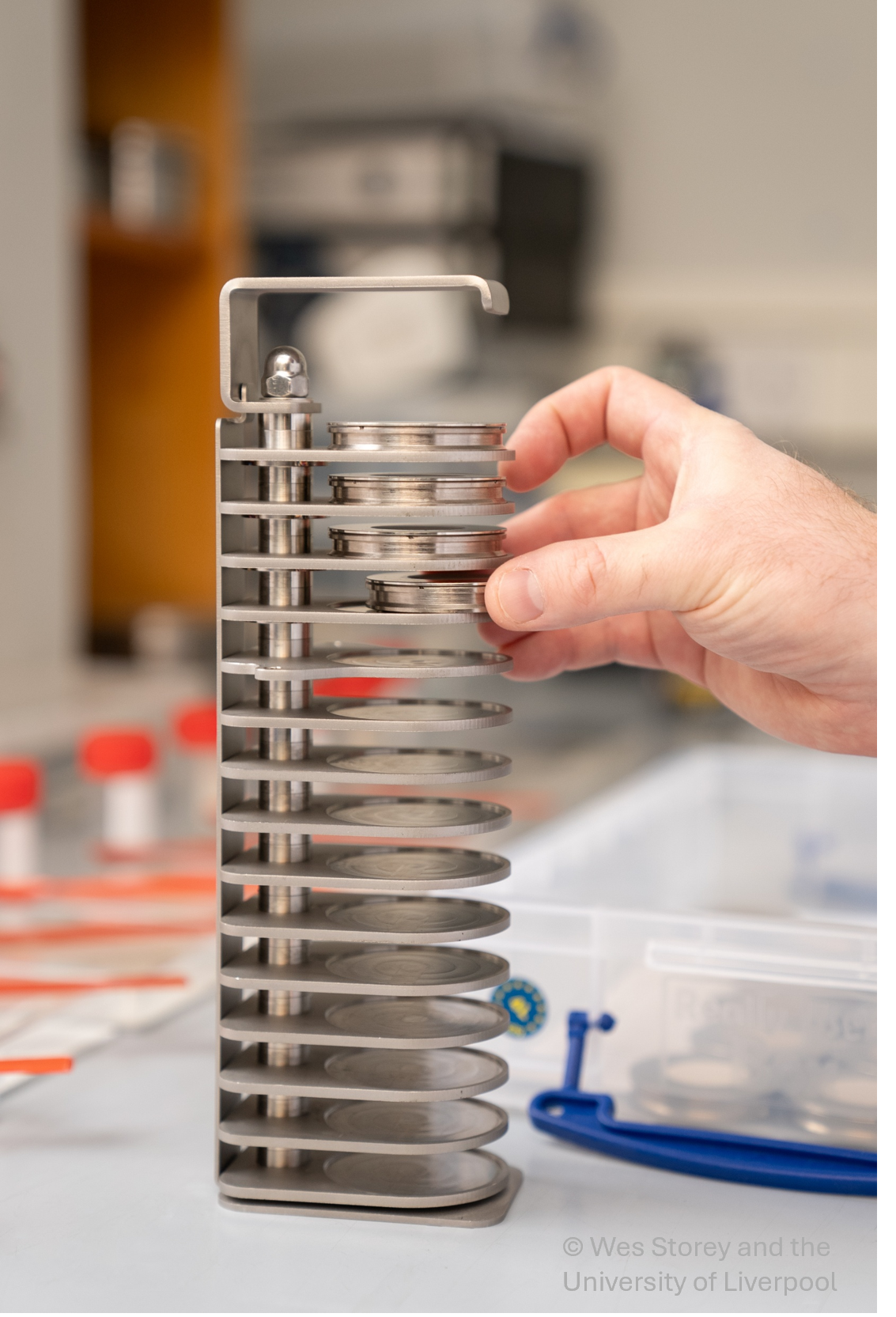
It is important to have confidence in your results. I can help improve the quality of those results, solve problems, and explain various strengths and limitations.
X-Ray Diffraction can be carried out in many different ways, with differing results, perfect agreement of results from different labs is highly unlikely. It is important to consider what level of detail has been asked for from the lab in question, e.g. has a clay separate been requested, will details of smectite interstratification, or chlorite chemistry be determined etc. The focus of the lab can affect the type of results; A lab set up for academic research may for example yield better detection limits, while a lab with experience in the energy industry may characterise interstratified clay minerals more accurately. There can be much variation even within a mineral species, both elemental substitution and varying crystallinity affect the identification and quantification; This sensitivity can be advantageous, or deleterious.
However, when following common best practice methods, all results from different labs should show very similar results, show the same trends, and support the same geological interpretations.
Care must be taken when integrating XRD results with those from other techniques, such as optical point counting. It is essential to understand the strengths and weaknesses of each technique, and integrate appropriately.
Even bearing in mind the aforementioned limitations; X-Ray Diffraction remains one of the most useful methods in petrological studies of fine grained rocks, and those containing clay minerals, phyllosilicates and alteration/weathering products.